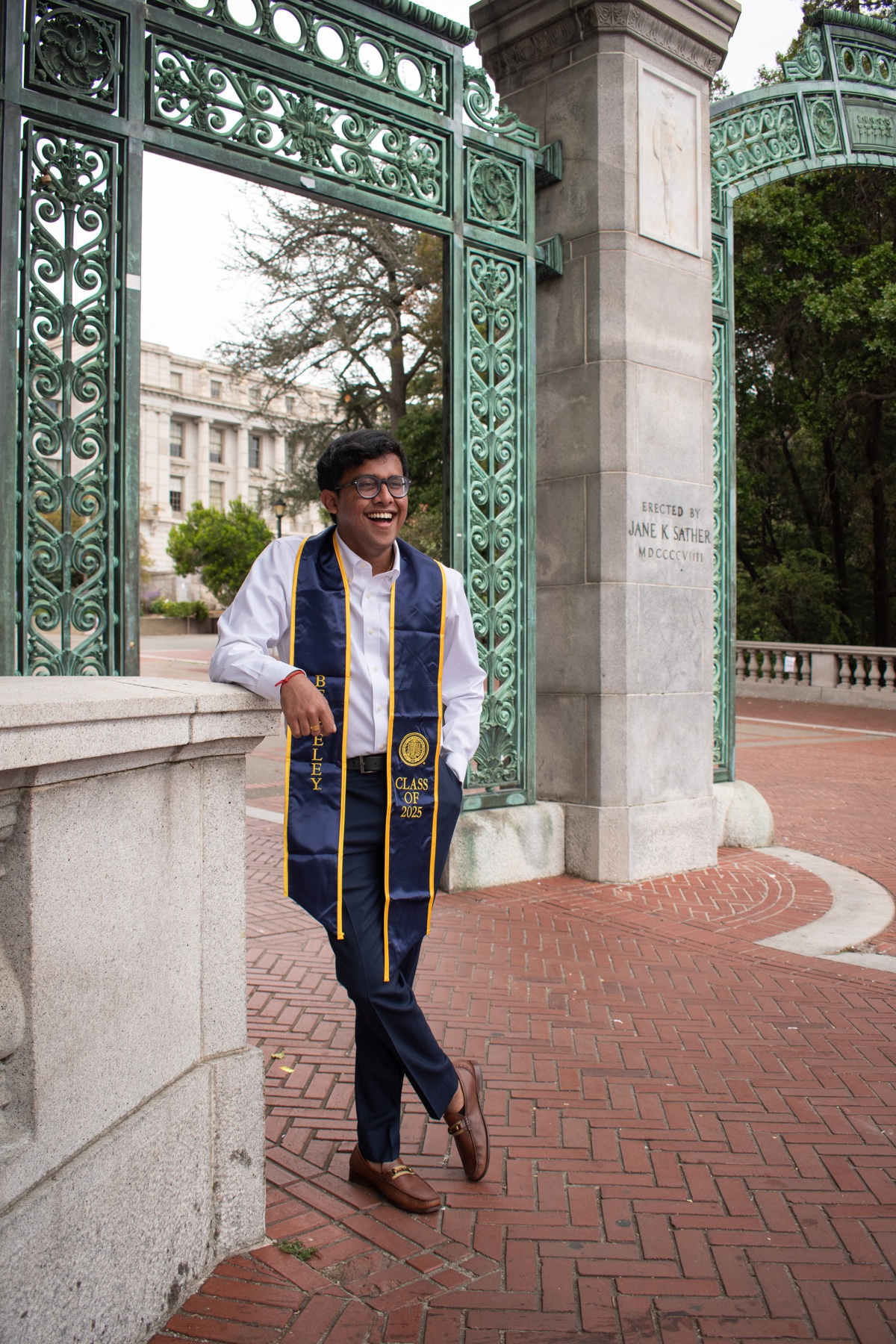
Seyone Chithrananda
(say-own)
I’m a PhD student in Bioengineering at Stanford (since 2025), co-advised by Michael Fischbach and Brian Hie.
I work on machine learning for metagenomic discovery, building tools to discover and engineer molecular function.
Most recently, I’ve been mining microbial genomes for immunomodulatory factors.
Research
I’m interested in combinatorial coding in biology—how a limited set of components can give rise to a vast range of functions. I use computation to understand this logic and explore how it can help us build more expressive biological systems.
Viruses, bacteria, and parasites are a rich source of evolutionary innovation. Their genomes encode molecules that activate, redirect, or evade vertebrate innate and adaptive immunity; many remain uncharacterized. I’m building discovery engines to turn that diversity into testable hypotheses about immune function.
In bacteria, I’m interested in the molecules that sharpen an immune response and those that blunt it. The Fischbach lab’s work on commensal vaccines and defined gut communities such as hCom2 offers ways to study both sides—from adjuvant-like factors to immunoevasins and enzymes that degrade host defenses.
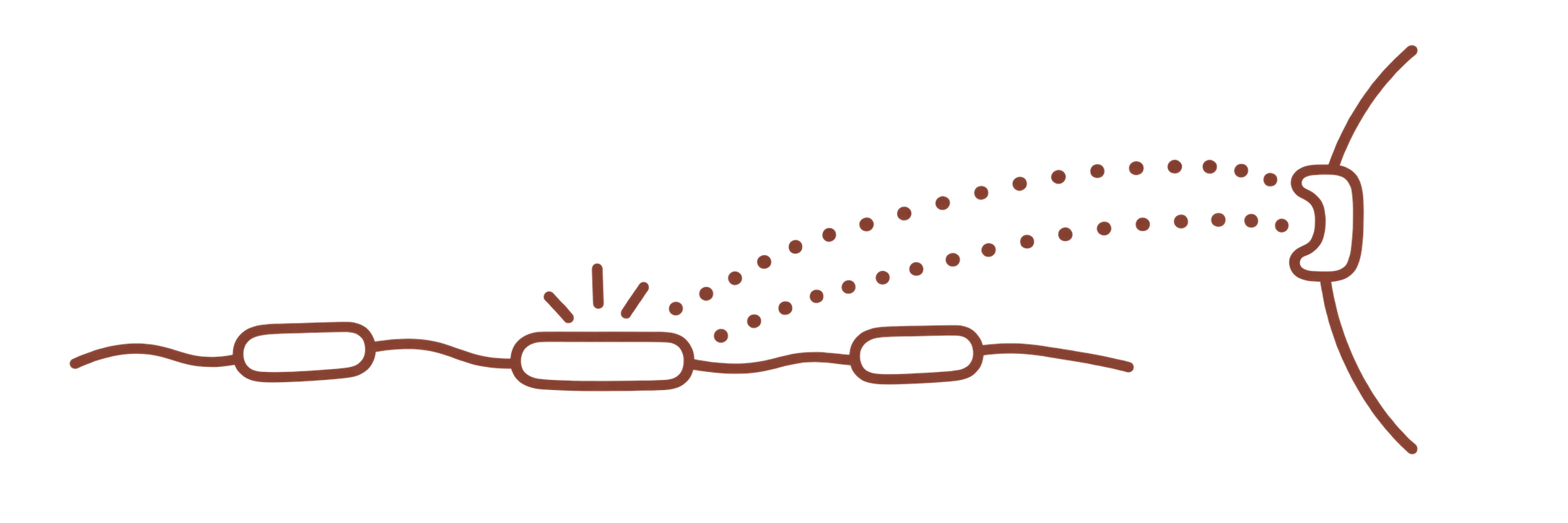
- Discover. Can sequence- and structure-guided genome mining reveal divergent effector ORFs, the host targets they act on, and new ligands of the innate immune repertoire?
- Design. Can we engineer proteins—adjuvants and antibody fragments that deliver antigen directly to MHC-II—that immunize effectively without engaging the inflammatory arm of innate immunity, so the response is better targeted and does not destroy the commensal niche?
- Measure. How can we screen for immune tolerance and immunodominance—what the immune system overlooks and what it responds to most strongly?
Background
I came to biology through computational chemistry and open-source work on DeepChem and ChemBERTa, alongside early research with Alan Aspuru-Guzik in Toronto. At Berkeley, I studied computer science and bioengineering and worked in Jennifer Doudna’s lab on RNA and protein design. At Microsoft Research, I worked with Kevin Yang on models connecting odor molecules, receptors, and perception. At Dyno Therapeutics, I worked on structure-guided sequence models to navigate epistatic fitness landscapes for gene therapy vectors.
Before joining Michael and Brian’s labs, I rotated with Theo Roth, learning to build scalable genetic discovery tools in primary human cells; with Will Allen, exploring high-throughput perturbation assays and algorithms for choosing which experiments to run next; and with Tony Wyss-Coray, using multiplexed mass spectrometry to map age-related changes in protein N-glycosylation. That last project also drew me toward immunology: glycans can mask antibody-binding sites, and changes in them can expose self-proteins to immune recognition, with implications for autoimmunity.
I helped lead the research committee at Machine Learning at Berkeley and co-organized the BioML seminar series. I enjoy helping newer researchers find their footing; if you’re getting started in computational biology, feel free to email me.
Selected publications
A few projects that shaped how I think. Full list on Google Scholar ↗
- Forecasting viral evolution from phylogenetic trees Using viral family trees to forecast mutations, including ones that emerged years later.
- Mapping the combinatorial coding between olfactory receptors and perception with deep learning Predicting which odor molecules activate which receptors, and how those patterns relate to perceived smell.
- ChemBERTa-3: an open source training framework for chemical foundation models Open-source tools for training and comparing molecular models, with experiments up to 1.1 billion molecules. Earlier ChemBERTa (NeurIPS ML4Molecules 2020) tested an early molecular transformer for property prediction; ChemBERTa-2 (ELLIS 2021; preprint 2022) tested how pretraining scale affects performance.
- Functional protein mining with conformal guarantees Searching protein databases efficiently while controlling the risk of missed results.
- RNA language models predict mutations that improve RNA function Using sequence models and experiments to find changes that improve RNA function.
Elsewhere
Google Scholar · GitHub · X
Feel free to email me about research or anything adjacent.